
Insulin Resistance: One Of The Biggest Silent Threat to Longevity
Updated: Aug 8
You go for your yearly check-up, tick off the usual tests, and walk out thinking you’re in the clear. But what if one of the most significant risk factors wasn’t even on your results slip?
Most people worry about their weight, blood pressure, or cholesterol. Whilst these are important, millions of people are living with an even bigger metabolic problem without knowing it. It’s called insulin resistance, and chances are you’ve never been tested for it.
What is Insulin Resistance?
Insulin resistance is a condition where your body becomes less responsive to insulin. Insulin is a hormone made by the pancreas that helps move glucose (sugar) from the bloodstream into the cells for energy or storage.
When your body is functioning normally, glucose levels rise after eating. The pancreas, sensing the glucose in the blood, releases insulin, which acts like a key, unlocking the gates so glucose can enter the cells. Blood glucose levels return to normal once glucose is taken up by the cells.
In insulin resistance, this process is malfunctioning. Muscle, fat and liver cells in particular are not responding to these signals to unlock the gates. The pancreas detects the glucose remaining in the blood, and in response compensates by releasing more insulin to bring the glucose levels down. Over time, this leads to chronically high insulin levels, known as hyperinsulinaemia [1].
Why Insulin Resistance is Dangerous
Insulin resistance does not just affect blood sugar. It drives widespread dysfunction across the body long before diabetes develops.
Hyperinsulinaemia alone causes health problems through a wide variety of mechanisms:
Fat accumulation: Persistently high insulin increases fat storage and reduces fat breakdown. This leads to obesity and fat accumulation around abdominal organs (visceral fat) [2].
Inflammation: Fat cells release inflammatory molecules, which worsens insulin resistance and causes oxidative stress and DNA damage. Oxidative stress occurs when harmful molecules overwhelm the body's natural defences, leading to cellular damage [3].
Blood vessel dysfunction: Insulin resistance disrupts nitric oxide production, which is responsible for widening the blood vessels, thereby promoting high blood pressure. Additionally, it increases vascular smooth muscle proliferation and blood vessel inflammation, both of which are important processes in atherosclerosis, the formation fatty plaques that narrow arteries to the heart and brain [4].
Cancer: Insulin stimulates insulin-like growth factor 1 (IGF-1), which signals cells to grow and divide more than normal. Along with inflammation, these mechanisms creates an environment more favourable for cancer development [5].
Health Risks of Insulin Resistance
These processes contribute to the development of a large number of conditions across several different body systems, including at least 13 types of cancer [6,7]:

Insulin Resistance vs Other Risk Factors
Many of you know that high blood pressure, high LDL (”bad”) cholesterol and smoking are risk factors for heart disease. But how does insulin resistance compare to these other markers when we talk about risk to your health?
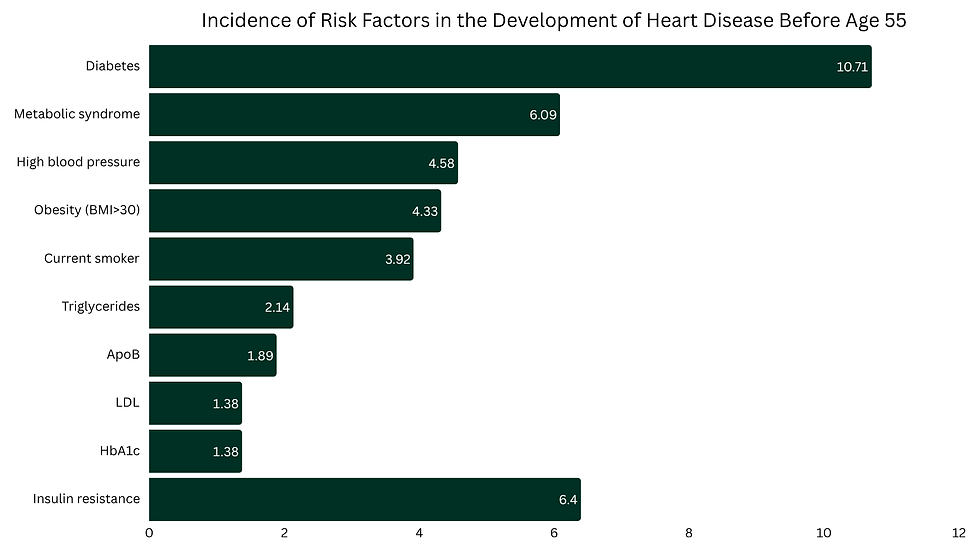
In a large analysis of over 28,000 women followed over time, researchers assessed more than 50 risk factors of developing coronary artery disease before age 55.
One of the strongest predictors was a marker of insulin resistance called Lipoprotein Insulin Resistance Index (LP-IR), which ranked above many traditional risk factors such as blood pressure, HbA1c, LDL and apolipoprotein B (ApoB) [8].
While diabetes itself remained the strongest risk factor, insulin resistance was one of the most important early signals of future cardiovascular disease.
Similar associations have also been observed using other measures of insulin resistance in both men and women[9,10].
You Might Have Insulin Resistance and Not Even Know It
The problem with traditional blood tests assessing glucose metabolism is they become abnormal once metabolic dysfunction has already progressed to prediabetes or diabetes, not early when insulin sensitivity is already impaired. Insulin resistance usually appears 10-20 years before type 2 diabetes is diagnosed [11].
During the early stages, the pancreas compensates by producing more insulin to maintain blood glucose within a normal range. Even if blood sugar appears normal, the body is being damaged by chronic exposure to hyperinsulinaemia and insulin resistance. That is why fasting blood glucose, HbA1c and even fasting insulin may still appear normal in early insulin resistance, lulling you into a false sense of security.
Not carrying excess body fat does not mean you are immune from insulin resistance. It can occur in those of normal body weight. It is estimated that just over 30% of normal weight individuals may have underlying metabolic dysfunction [12].
This means someone can have a normal fasting glucose and HbA1c, and still have significant insulin resistance.

HbA1c
HbA1c reflects average blood sugar over the past 2-3 months.
It is useful for diagnosing diabetes and monitoring known glucose problems, but not designed to detect early insulin resistance. The compensatory insulin production to keep glucose in the normal range means average glucose over those 2-3 months will be normal, until more advanced insulin resistance occurs.
Typical interpretation of HbA1c:
Normal: ≤5.6% (38 mmol/mol)
Pre-diabetes: 5.7-6.4% (39-46 mmol/mol)
Diabetes: ≥6.5% (48 mmol/mol)
Fasting blood glucose (BGL/BSL)
This measures blood sugar after an overnight fast.
Similarly to HbA1c, fasting glucose is late marker, only becoming abnormal once the pancreatic insulin production can no longer keep pace.
Typical interpretation of fasting BGL:
Normal: ≤5.5 mmol/L (99 mg/dL)
Prediabetes: 5.6-6.9 mmol/L (100-124 mg/dL)
Diabetes: ≥7.0 mmol/L (126 mg/dL)
Fasting Insulin
Measures the amount of insulin circulating in the blood after fasting. With insulin resistance forcing the body to produce more insulin, elevated fasting insulin can suggest the body is struggling to control glucose levels.
However it cannot be relied on solely as a measure of insulin resistance as it has a few limitations:
Fasting insulin levels can be highly variable day-to-day, as they are easily affected by recent changes in stress, sleep, diet and exercise.
Fasting insulin only reflects levels after an overnight fast, not how the body handles glucose after eating. Overnight, the liver is the main organ releasing glucose into the bloodstream to feed the brain. Insulin acts as the brake on that process, ensuring the glucose output matches what the body needs. If there is hepatic (liver) insulin resistance, more insulin is required to keep the liver’s glucose release in check, which will may show up as a high fasting insulin. The other area insulin resistance shows up is in the peripheral (muscle) tissue, which is most active after a meal. Insulin acts on the muscle tissue to move gut-absorbed glucose into the cell. Muscle insulin resistance can be missed by fasting insulin levels alone. Someone might have normal fasting glucose and insulin, but have high post-meal glucose and insulin spikes due to muscle insulin resistance.
Influenced by pancreatic beta-cell function. If beta-cells are failing (as seen in later stage prediabetes or diabetes - refer to Stages of Insulin Resistance graph above), they cannot produce enough insulin to compensate for insulin resistance. Low insulin output from beta-cell failure can result in a normal or low HOMA-IR/fasting insulin reading, even though the person is very insulin resistant.
Individual pathology labs use different methods to measure insulin levels, resulting in different reference ranges, making it hard to compare results.
Oral Glucose Tolerance Test (OGTT)
Measures the body's response after ingesting a large glucose load. The usual protocol involves measuring fasting glucose levels, then drinking a 75g glucose solution, with blood glucose measured again at 1 and 2 hours.
OGTT assesses both hepatic (liver) and peripheral (muscle) insulin resistance. The fasting glucose assesses insulin’s ability to suppress liver glucose production. The 1 and 2 hour levels after a glucose load assesses:
Gastric emptying of consumed glucose
Gut absorption
Gut hormone (incretin) responses
Pancreatic insulin secretion
Liver glucose output
Insulin sensitivity in the muscles
All OGTT measurements suffer from the similar limitations:
The test is time consuming, taking 2 hours to complete, and drinking 75g of glucose at once is often unpleasant for patients.
It has poor reproducibility, meaning the results vary on repeat testing. Studies have shown in those diagnosed with impaired glucose tolerance on the first OGTT, more than 50% would be reclassified as normal glucose tolerance on repeat testing in both adults and children [13, 14]
Results are affected by recent carbohydrate intake, exercise, sleep, and certain medications (eg. corticosteroids, diuretics), contributing to the poor reproducibility.
Gut factors affect insulin release and glucose. How quickly the glucose clears the stomach, efficiency of intestinal glucose absorption, and gut hormonal release all affect sugar levels, independent of liver and muscle insulin resistance. Glucose levels could be higher or lower depending on the gut, which affects the accuracy of the OGTT measurements.
Whilst these biomarkers are useful to monitor, there are more accurate and early measures of insulin resistance available to us.
Better Measures of Insulin Resistance
Hyperinsulinaemic-Euglycaemic clamp
Gold standard, most accurate measure of insulin sensitivity and resistance. It involves infusing IV insulin and glucose directly into the bloodstream. This method is only used in research settings due to its impracticality in clinical settings. Other measurements of insulin resistance are compared to the clamp to assess their accuracy.
Triglyceride-Glucose (TyG) Index
Calculated score measuring insulin resistance using fasting triglycerides and fasting glucose.
Triglycerides rise in insulin resistance through several mechanisms:
Increased free fatty acid (FFA) release. Insulin resistant adipose (fat) tissue breaks down more fat (lipolysis) into FFAs. These FFAs travel to the liver where they are converted into triglycerides and packaged into VLDL (very low density lipoprotein): a type of lipoprotein that contributes to heart disease.
Excessive liver production. Excess glucose not taken up by insulin resistant muscle cells after a meal is routed to the liver where its converted to triglycerides. Also, the liver, not responding to insulin, continues to produce triglycerides and fails to suppress glucose output.
Reduced clearance. Lipoprotein lipase in adipose tissue, which is responsible for clearing triglycerides, is upregulated by insulin after meal. Its activity is impaired in insulin resistance.

TyG index has been shown to be an accurate measure of insulin resistance [15]. It also may predict insulin resistance better than HOMA-IR [16]. With regard to other health risks, elevated TyG index has been associated with future risk of heart disease [17], dementia [18] and multiple types of cancer [19].
Strengths of TyG index:
Uses two commonly tested markers, making it simple and easily accessible.
Absence of insulin in the calculation makes the result less influenced by pancreatic beta-cell function and fluctuations of fasting insulin.
Limitations of TyG index:
More research is required to determine cut-offs for different populations.
High triglycerides from other causes can overestimate insulin resistance - eg. excessive alcohol use, genetic hypertriglyceridaemia.
My interpretation:
There's no single validated cutoff for TyG index. Published thresholds across studies cluster loosely between about 4.5 and 4.8 [20]. My own practical approach is to treat values below this range as more reassuring, values above it as more suggestive of insulin resistance, and values falling within the cluster itself as uncertain requiring evaluation of other markers (eg. waist circumference, blood pressure, HDL).
Suggests normal insulin sensitivity: <4.5
Uncertain insulin sensitivity: 4.5-4.8
Suggests insulin resistance: >4.8
You can calculate your TyG Index here.
HOMA-IR (Homeostatic Model Assessment of Insulin Resistance)
HOMA-IR is calculated score using fasting glucose and fasting insulin levels. It reflects liver insulin resistance, based on how well insulin suppresses glucose production in the liver.
It is an accurate measure of insulin resistance [21]. Higher HOMA-IR is associated with type 2 diabetes [22], heart disease [23] and metabolic-associated fatty liver disease (MAFLD) [24].
Limitations of HOMA-IR:
Same limitations of using fasting insulin discussed above - misses post-meal muscle insulin resistance, can underestimate in later stage insulin resistance, insulin levels are affected by various factors and different assays used between labs.
Inferior to TyG index for detecting insulin resistance and predicting risk of metabolic-related conditions.
Typical interpretation:
There’s no single universally validated HOMA-IR cutoff, with published thresholds ranging from 1.5 to 3.0 depending on the population studied, with lower cutoffs typically in Asian populations [25].
Suggests normal insulin sensitivity: ≤1.9
Suggests insulin resistance: ≥2.0
You can calculate your HOMA-IR here.
Taking The Fight To Insulin Resistance
Here's the part most people get wrong about insulin resistance: it's not a life sentence. Whether you've been diagnosed with insulin resistance or you're looking to prevent it, there are steps you can take to improve your insulin sensitivity. In most cases, insulin resistance can be reversed, especially when addressed early with the right evidence-based interventions.
Weight Loss (If Overweight)
Weight loss is one of the most powerful ways to reduce insulin resistance. Excess fat, particularly visceral fat and fat stored within the liver and muscle, drives insulin resistance by promoting low-grade inflammation and interfering with normal insulin signalling in these tissues. Losing weight reduces this effect of fat tissue, which is why even modest weight loss can produce outsized metabolic benefits.
Even 5% weight loss has been shown to improve multi-organ insulin sensitivity, triglycerides, blood pressure and visceral fat [26]. Greater improvements in insulin resistance are seen with higher weight loss (>15%), with even the reversal of type 2 diabetes [27].
We’ll cover practical, sustainable strategies for weight loss in a dedicated post.
How to Optimise Your Diet for Insulin Resistance
Ask ten people what the best diet for insulin resistance is, and you'll get ten different answers: keto, low-carb, Mediterranean, intermittent fasting, all fighting for the title of "best." The truth is there's no single perfect diet for insulin resistance. What actually matters is a set of shared principles that most effective approaches have in common [28].
In short, the goal is to:
Minimise highly processed foods and refined carbohydrates
Predominantly eat unprocessed and minimally processed whole foods
Prioritise high fibre intake
These principles improve insulin sensitivity because they reduce glucose and insulin spikes, improve satiety and reduce overeating, improve overall energy balance, and reduce your exposure to ultra-processed foods with poor nutrient quality.
Let’s define some terms:
What Foods Cause Insulin Resistance?
Processed foods are foods that have been altered from their natural state in any way. During processing, they're stripped of their natural fibre, vitamins and minerals, then combined with added sugars, fats, and salt to enhance taste and shelf life.
Common examples of processed and refined carbs:
Sugary breakfast cereals: Froot Loops, Coco Pops, Nutri Grain, Crunchy Nut
Baked goods: cakes, muffins, pastries, cookies
Sugary snacks: lollies, chocolate, honey, ice cream
Packaged snack foods: chips, crackers, biscuits
Processed grains: white rice, white bread, regular pasta
Whilst processed foods may be delicious, the loss of structure, fibre and nutrients contributes to insulin resistance and metabolic dysfunction through a few key mechanisms:
Glucose and insulin spikes. These foods are rapidly digested into glucose, causing faster absorption into the bloodstream. This triggers blood glucose spikes, forcing your body to release large amounts of insulin in response.
Metabolic dysregulation. This sugar load overloads your body's glucose disposal pathways, so the overflow gets sent to the liver. The liver converts this excess glucose into fat, while also producing triglycerides and VLDL.
Overeating. Normally, eating triggers gut stretch receptors and hormones that signal fullness. Rapid digestion blunts these signals. Low protein and fibre content makes these foods less filling too, so it's easier to overeat.
The goal doesn’t need to be to eliminate carbohydrates: it’s to choose higher quality, less processed sources that support better blood sugar control and satiety, generally wholegrains and foods high in fibre. Simply reducing sugar intake and replacing those calories with starch-based foods can result in meaningful improvements in insulin resistance, body weight, triglycerides and LDL cholesterol [29]. This occurred after just 9 days without any reduction in total calories or carb intake, highlighting the effect of minimising highly processed carbohydrates specifically.
Best Foods for Insulin Resistance
Unprocessed and minimally processed foods are parts of plants and animals in their natural state. They retain their original fibre, vitamins and antioxidants, without added sugars, salts or synthetic preservatives.
Common Examples Of Unprocessed And Minimally Processed Foods:
|
These foods support insulin sensitivity for the opposite reasons processed foods work against it: their intact fibre and structure slow digestion, blunt glucose spikes, and support the fullness signals that processed foods disrupt.
Not All Processing Is Bad
It's important to note that not all processed foods are unhealthy. Some foods undergo processing that maintains or even enhances their nutritional quality. Examples include protein- or fibre-enriched wholegrain breads, certain breakfast cereals (e.g. Weet-Bix), Greek yoghurt, frozen vegetables, and canned beans or tuna.
So What About Diets?
I don't like to recommend specific diets to my patients, I'd rather focus on overarching principles about food choices. Several well-known diets have been shown to improve insulin sensitivity, largely because they naturally align with the principles above:
Exercise for Insulin Resistance
When it comes to insulin resistance, exercise does something food changes alone can’t, it opens a second insulin-independent doorway for glucose to get out of your bloodstream and into your muscles. Aerobic and resistance training each have distinctive, but complementary benefits, making a combined strategy most beneficial for optimising insulin sensitivity.
Mechanisms: Why Exercise Fixes Insulin Resistance
Aerobic Exercise
When you exercise aerobically, your muscles take up glucose through a pathway that doesn't actually need insulin to work. Muscle contraction activates an enzyme called AMPK, which triggers glucose transporters (GLUT4) to move from storage inside the muscle cell to the cell surface, where they can pull glucose out of the bloodstream [35]. This pathway is insulin-independent, meaning aerobic exercise can lower blood glucose through an alternative pathway, even in people where insulin signalling is impaired.
Resistance Training
Skeletal muscle is the primary tissue responsible for glucose uptake via insulin-dependent and -independent pathways. Increasing muscle mass (muscle hypertrophy) through resistance training means a larger capacity to store and utilise glucose, effectively giving you a bigger reservoir to draw on after meals. Resistance training also increases GLUT4 expression, in a similar way to aerobic exercise. On top of this, regular strength training reduces inflammatory molecules, which are known contributors to impaired insulin signalling and cardiovascular risk [36].
Receipts: What the Research Actually Shows
The evidence supporting the prevention of diabetes with exercise is strong. Engaging in 150 mins/week of moderate-intensity physical activity, even something as simple as brisk walking, lowers the risk of diabetes by 26% compared with being sedentary. Benefits continue to increase with higher volumes: 300 mins/week reduces risk by 36%, with no evidence of plateau at higher activity levels [37]. High-intensity interval training (HIIT), which involves short bursts of high-intensity aerobic activity, is a time-efficient strategy to improve cardiometabolic markers [38]. Resistance training has also been shown to improve insulin sensitivity [39]. Combined aerobic and resistance training improves markers of insulin resistance better than either aerobic or resistance training alone [40, 41, 42].
Recommendations | |
Aerobic Exercise
| Resistance Training
|
With both types of exercise, improvements are seen when you:
| |
Sleep as a Lever for Insulin Sensitivity
We tend to think of insulin resistance as something driven by what we eat and how much we move. Sleep rarely makes the list. Yet the evidence linking sleep to glucose metabolism is strong enough that sleep deserves a seat at the table as a major, independent contributor. Inadequate sleep duration, poor sleep quality, and circadian disruption all worsen insulin sensitivity, with some of these effects showing up after a single night.
Shorter Sleep, Worse Insulin Resistance
Across observation studies, short sleep duration is consistently associated with reduced insulin sensitivity and impaired glucose tolerance [43]. Cohort data alone can't prove cause and effect, but interventional studies close that gap: when researchers deliberately restrict sleep and compare markers of insulin sensitivity to a normal-sleep control condition, the same pattern shows up.
A meta-analysis of randomised controlled trials found that experimentally restricting sleep significantly reduced insulin sensitivity across several accurate measures of insulin resistance. And the dose required is smaller than you'd think: just 1.5 hours of shortened sleep per night was enough to produce a measurable effect [44]. Even a single night of sleep restricted to 4 hours reduced insulin sensitivity by around 25% in healthy volunteers [45].
Encouragingly, the relationship runs in both directions. In people with chronic, habitually short sleep, extending sleep by just 1 extra hour a night improved insulin sensitivity and glucose handling [46]. This isn't a fixed injury, it's a highly responsive system.
It’s Not Just Duration, Quality Matters Just as Much
The quality of that sleep matters too. You can sleep a full 8 hours and still be negatively affecting your insulin sensitivity, if that sleep is poor quality.
If you're waking up feeling unrefreshed, or rousing frequently through the night, your body may not be reaching the deeper, restorative stages of sleep, and that has metabolic consequences, not just consequences for how tired you feel. Specifically, impairments in slow-wave sleep (SWS, "deep sleep," NREM Stage 3) independently reduce insulin sensitivity [47], likely because SWS plays a distinct restorative role in metabolic regulation. Common culprits behind SWS suppression include alcohol, short sleep duration, frequent awakenings (including undiagnosed sleep apnoea), pre-bed stress, and late caffeine intake.
Shift Work and Circadian Misalignment
Sleep duration and sleep quality are only part of the picture: when you sleep matters too. Our circadian rhythm is the internal 24-hour clock that governs the sleep-wake cycle, hormone release, and metabolic function. When your sleep timing falls out of sync with that internal clock (circadian misalignment) glucose regulation suffers, even if you're still getting adequate hours of sleep. This is most commonly seen in shift workers and after long-haul travel across time zones.
Epidemiological data shows shift workers carry a meaningfully increased risk of type 2 diabetes [48]. Part of this is simply that shift workers tend to sleep less overall, but circadian misalignment appears to be an independent contributor on top of that. In one study, researchers shifted participants' sleep window to the morning while keeping total sleep duration the same as an overnight-sleep control group. The circadian-misaligned group's insulin sensitivity was nearly twice as impaired as the group sleeping on a normal overnight schedule [49], indicating that timing, not just duration, is doing metabolic work.
What’s Driving This? The Proposed Mechanisms
The full mechanisms are not fully understood, but a few plausible, overlapping pathways have emerged:
Cortisol. Sleep restriction is a physiological stressor, and the stress response releases cortisol, which prompts the liver to increase glucose output. That said, the data here is mixed: some studies show a clear rise in cortisol with sleep restriction, others show no significant change, so this is unlikely to be the whole story [50].
Sympathetic nervous system activation. Sleep loss increases sympathetic tone and urinary catecholamines (norepinephrine, epinephrine). Elevated sympathetic drive promotes lipolysis, raising circulating free fatty acids, which interferes with insulin signalling in muscle and liver. Similarly to cortisol, catecholamines levels in these studies are mixed [51].
Inflammation. Both short sleep duration and poor sleep quality raise circulating inflammatory markers, which interferes with insulin receptor signalling [52].
Appetite and reward-driven eating. Sleep restriction skews appetite hormones (higher ghrelin, lower leptin) and increases activation in reward-related brain regions in response to food cues. In practice, this shows up as increased caloric intake, which independently drives weight gain and insulin resistance [53, 54]. It's a good example of sleep's effect being partly directly physiological and partly behavioural.
How to Actually Improve ThisA full deep-dive on fixing sleep will get its own post, but as a starting point:
|
Medications and Supplements for Insulin Resistance: What Actually Works
Lifestyle changes remain the single most powerful lever for reversing insulin resistance and preventing type 2 diabetes, nothing on this list replaces movement, sleep, and nutrition. But for high-risk patients, or when lifestyle changes alone aren't moving the needle, certain medications and supplements can meaningfully improve insulin sensitivity. Metformin, GLP-1-based agents, and SGLT2 inhibitors are best known as type 2 diabetes treatments, but growing evidence supports their use before diabetes develops.
Metformin: The First-Line Choice for Prediabetes
Metformin remains the most widely prescribed and best-studied medication for insulin resistance, and current guidelines recommend it as first-line pharmacotherapy for prediabetes. The landmark Diabetes Prevention Program followed prediabetic adults for an average of 2.8 years, comparing intensive lifestyle intervention, metformin, and placebo. The results were clear: intensive lifestyle intervention reduced diabetes incidence by 58%, while metformin reduced it by 31% [55]. This highlights that lifestyle change is the cornerstone of insulin resistance management, with metformin a valuable adjunct for certain patients.
Metformin works through three main mechanisms: reducing glucose production in the liver, decreasing intestinal glucose absorption, and increasing insulin sensitivity in muscle and fat tissue.
GLP-1-Based Agents: Semaglutide and Tirzepatide
Few medications in recent memory have generated as much attention as semaglutide (Ozempic, Wegovy) and tirzepatide (Mounjaro). For people with obesity and markers of insulin resistance, these drugs are among the most effective tools available for restoring normal glucose metabolism.
In adults with prediabetes and obesity, semaglutide reduced progression to type 2 diabetes roughly 6-fold over 68 weeks of treatment [56]. Patients also lost between 13.7% and 16.5% of their body weight on semaglutide. Tirzepatide performed even more impressively in a 3-year trial of adults with obesity and prediabetes: it cut the risk of developing type 2 diabetes by 94%, roughly a 14-fold reduction, compared with placebo [57]. Weight loss on tirzepatide ranged from 12.3% on the 5 mg dose up to 19.7% on the 15 mg dose.
These medications act on three fronts:
Pancreas: stimulate insulin release in response to food and suppress glucagon, reducing the liver's glucose output
Stomach: slow gastric emptying, allowing glucose to be absorbed more gradually
Brain: reduce appetite and food cravings
One important thing to know: most people need to remain on these medications long-term, often for life, to maintain their benefits. Stopping treatment is typically followed by weight regain and a return of insulin resistance, so this is a long-term commitment rather than a short course.
SGLT2 Inhibitors: A Kidney-Based Approach
SGLT2 inhibitors (empagliflozin, dapagliflozin) work differently to the other medications on this list, they act on the kidney rather than the pancreas, gut, or brain, causing excess glucose to be excreted in urine. The evidence for their use in prediabetes is newer and less direct, coming mostly from secondary analyses of heart failure and kidney disease trials rather than dedicated diabetes prevention studies, and showed a modest 21% reduction in new-onset diabetes [58]. They're best considered a promising off-label option for selected high-risk patients.
Berberine: A Natural Alternative
Of all the supplements marketed for insulin resistance, berberine has the strongest data behind it. Berberine is a plant alkaloid, found in barberry, goldenseal, and several traditional Chinese medicine herbs, and sold over the counter as a supplement.
Meta-analyses of randomized trials show berberine meaningfully reduces HbA1c by ~0.7%, fasting glucose, and HOMA-IR [59, 60]. Its mechanism is similar to metformin's, both activate an enzyme called AMPK, which is central to how cells regulate energy and glucose uptake.
A few caveats are worth knowing: most trials are relatively short (1 to 3 months), come from a single region Chinese study populations, and berberine can interact with several common medications (including statins, blood thinners and immunosuppressants) via its effect on liver enzymes. Anyone considering it should discuss it with their doctor first, particularly if they're on other medications.
Vitamin D: Safe and May Be Beneficial
Vitamin D is another supplement with reasonable evidence supporting it’s use in improving glucose metabolism. It has has been shown to reduce the risk of diabetes risk by 15% in prediabetics, with the effect being more pronounced in those with levels ≤29 ng/mL [61]. The proposed mechanism is primarily derived from animal studies, which suggests vitamin D helps pancreatic beta cells release insulin, improving how muscle and fat tissue respond to that insulin, calming the low-grade inflammation that drives insulin resistance, and protecting beta cells from degrading over time [62].
This is a useful reminder that supplements are not without harm. Unlike prescription medications, supplement manufacturing isn't held to the same regulatory standard, which means product quality, purity, and stated dose can vary considerably between brands. Supplements can also interact with prescription medications and with each other. As a general rule: only take a supplement if the evidence suggests it will provide a meaningful benefit for your specific situation, and choose a reputable, third-party-tested source if you do.
Insulin Resistance: Screen Early and Take Action
Insulin resistance rarely announces itself early, which is why it does so much damage before anyone notices. No single blood test gives a definitive answer. Fasting glucose is often the last marker to shift, and fasting insulin has its own quirks, but composite markers like the TyG index and HOMA-IR make better use of the same numbers, offering a useful early signal well before diabetes or heart disease show up. The encouraging part is that insulin resistance is one of the more reversible conditions in medicine: the diet, exercise, and sleep changes covered earlier can meaningfully shift insulin sensitivity in the right direction. For now, the most useful step is simple: talk to your doctor about which of these markers make sense for you, and use them as a starting point on your health journey.
The information provided in this blog is for educational and general informational purposes only and is not intended as a substitute for professional medical advice, diagnosis, or treatment. No doctor/patient relationship is formed. Always seek the advice of your medical practitioner or another qualified healthcare provider with any questions you may have regarding your health or medical condition. Never disregard professional medical advice or delay in seeking it because of something you have read on this blog. Reliance on any information provided here is solely at your own risk.
